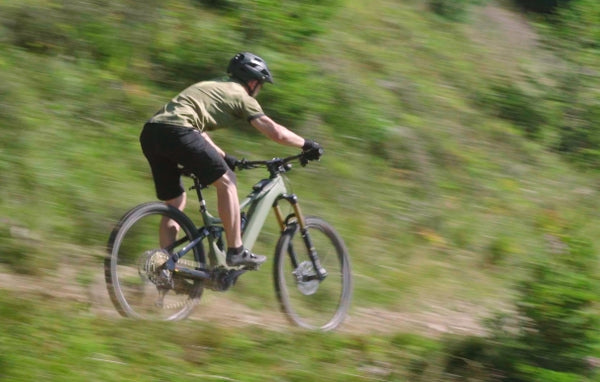
What Is a Full-Suspension Mountain Bike?
A full-suspension mountain bike features a suspension fork at the front and a rear shock to absorb impacts from uneven terrain. This setup helps improve traction, comfort, and control on rocky trails, steep descents, roots, and technical sections where maintaining stability is important.
Key Benefits of Full-Suspension Mountain Bikes
Full-suspension bikes help reduce the impact of bumps and keep the tyres in contact with the ground across challenging terrain. This can improve grip, confidence, and handling on demanding trails, particularly during descents, although the added suspension usually increases weight, cost, and maintenance compared with a hardtail.
Types of Full-Suspension Mountain Bikes
Full-suspension bikes are available in different designs to suit everything from long-distance cross-country rides to steep, technical downhill trails. Suspension travel, geometry, frame design, and component choices determine how a bike performs, so the right type depends on the terrain and riding style.
Cross-Country and Trail Riding
Cross-country full-suspension bikes typically prioritise efficient climbing, lower weight, and balanced handling, often using around 100 to 120 mm of suspension travel. Trail bikes generally offer a more versatile setup, commonly with around 120 to 150 mm of travel, making them suitable for mixed terrain, flowing trails, and technical descents.
Enduro and Downhill Riding
Enduro bikes usually have longer suspension travel, often around 150 to 180 mm, to handle steep descents, rough trails, and larger obstacles. Downhill bikes can feature around 180 to 220 mm of travel for demanding descents and jumps, prioritising impact absorption and control over efficient climbing.
How to Choose the Right Full-Suspension Mountain Bike
Choosing a full-suspension bike involves considering suspension travel, frame size, wheel size, tyres, gearing, and brakes rather than focusing on appearance alone. Riders comparing different full-suspension mountain bikes should match these features to their experience, preferred trails, budget, and the balance they want between climbing efficiency and downhill capability.
Suspension Travel and Setup
Suspension travel determines how much movement is available to absorb impacts, with shorter travel generally suiting faster cross-country riding and longer travel favouring rougher, more demanding terrain. Air shocks are usually lighter and easy to adjust, while coil shocks can suit aggressive riding, depending on the bike design and the rider's needs.
Frame Material and Wheel Size
Aluminium frames offer a practical balance of durability and affordability, while carbon fibre frames can reduce weight at a higher price. Wheel sizes such as 27.5 and 29 inches affect rollover ability, agility, and handling, so the best option depends on rider fit, trail conditions, and personal preference.
Tyres, Gearing, and Brakes
Tyre width and tread influence grip, rolling resistance, and stability, while a suitable gear range makes steep climbs easier to manage. Reliable disc brakes are important for controlling speed on technical descents, and a dropper seatpost can make it easier to lower the saddle for descents and raise it for climbing.
Are Full-Suspension Mountain Bikes Harder to Pedal?
Full-suspension bikes can be heavier and may lose some pedalling efficiency when the suspension moves under power, especially on smooth roads and steady climbs. Modern suspension designs help reduce unwanted movement, and the added traction and comfort can be worthwhile for riders who regularly tackle rough trails or varied terrain.
Full-Suspension Fat Bikes and Electric Options
Full-suspension fat bikes combine front and rear suspension with wide tyres that can provide additional flotation and grip on loose or soft surfaces. Riders looking for this combination can explore full-suspension fat bikes, while electric full-suspension models add motor assistance for longer rides and demanding climbs.
Carbon and Aluminium Electric Full-Suspension Bikes
Carbon electric full-suspension bikes can appeal to riders seeking a lighter frame, while aluminium models offer a durable and often more budget-conscious alternative. Compare carbon electric full-suspension bikes with aluminium electric full-suspension bikes by considering frame fit, battery capacity, motor performance, suspension setup, and the overall component specification.
How to Maintain a Full-Suspension Mountain Bike
Regular maintenance helps preserve suspension performance, braking reliability, and overall bike handling. Clean the drivetrain after muddy rides, check tyre pressure and brake condition, inspect suspension pivots and bearings for wear, and service the front fork and rear shock according to the manufacturer's recommended intervals.


 150/145mm Travel
 29" x 2.5" Wheels
 1x12 Speed SRAM AXS
 EP-801 Shimano Motor
 85Nm Torque
 720Wh Battery
 from 20.9kg