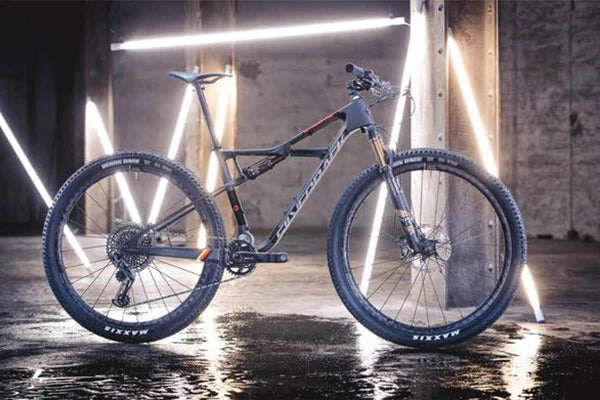
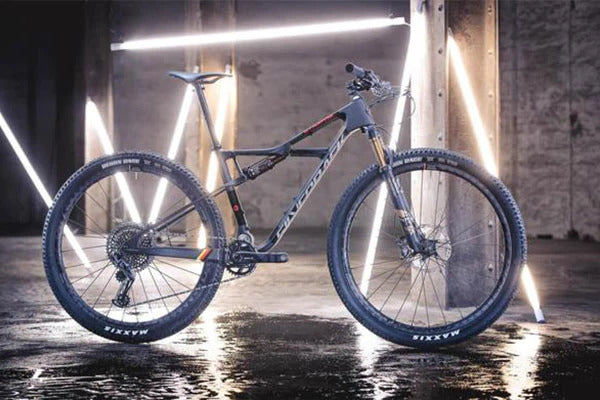
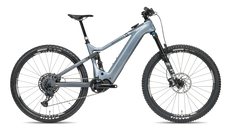
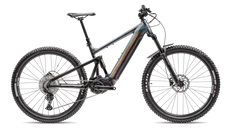
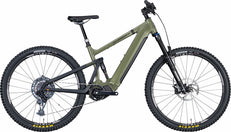
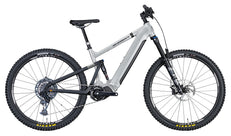
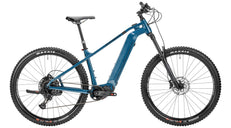
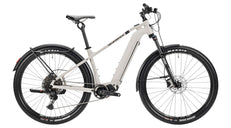
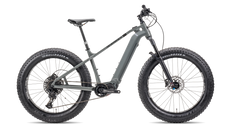
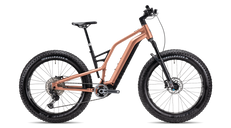
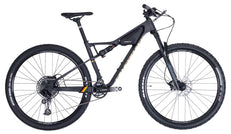
150/145mm Travel
 29" x 2.5" Wheels
 1x12 Speed SRAM AXS
 EP-801 Shimano Motor
 85Nm Torque
 720Wh Battery
 from 20.9kg


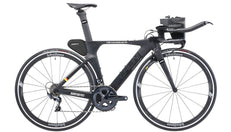
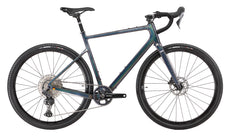
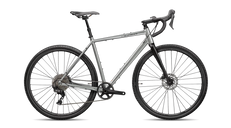
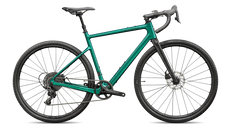




Tour de France 2026 Technology Explained
The Tour de France is more than the world's greatest cycling race — it's the most demanding technology laboratory in sport. Every July, the world's top teams deploy the most advanced bicycles, components, and data systems ever built, pushing the boundaries of what's possible on two wheels. The innovations that debut at the Tour de France today become the technology that filters down to performance bikes for everyday riders within a few years.
In this guide, we break down the key technologies that defined the 2026 Tour de France: aerodynamic frames, electronic groupsets, tyre technology, power meters, nutrition systems, and the data analytics that now underpin every team's race strategy.
Aerodynamic Frame Technology
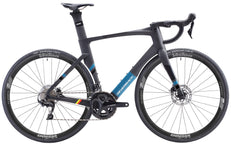
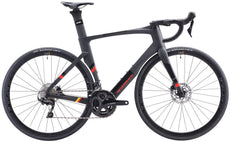
Aerodynamics is the single biggest performance gain available to a road cyclist. At race speeds of 40–60 km/h, aerodynamic drag accounts for over 80% of the total resistance a rider must overcome. The 2026 Tour saw teams racing on frames that have been refined in wind tunnels to an extraordinary degree of precision.
Integrated Cockpits
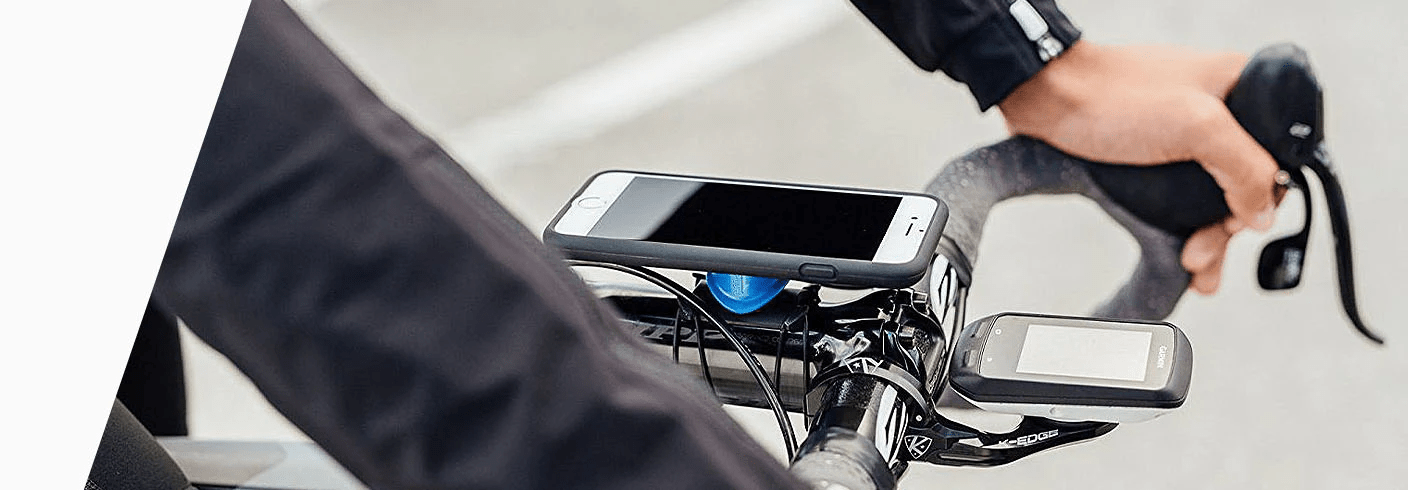
The fully integrated cockpit — where handlebars, stem, and cables are merged into a single aerodynamic unit — has become standard at the Tour. These systems eliminate the turbulence created by exposed cables and separate components, saving watts that matter over a 200 km stage. The trade-off is reduced adjustability and more complex maintenance, but at the Tour de France, every watt counts.
Frame Tube Shaping
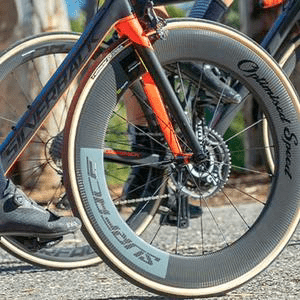
Modern Tour frames use truncated aerofoil tube profiles — shapes that mimic aircraft wing cross-sections but are cut short to comply with UCI regulations on tube depth-to-width ratios. The result is frames that are simultaneously stiffer, lighter, and more aerodynamic than anything available five years ago.
Disc Brakes: Now Universal
The 2026 Tour was the first edition where disc brakes were universal across all teams — a technology that was controversial just a few years ago. Disc brakes offer superior modulation and consistent stopping power in wet mountain descents, and the hydraulic systems used at the Tour are now available across Silverback's component range.
Electronic Groupsets: The New Standard
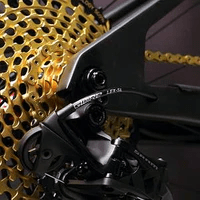
Electronic shifting has been standard at the Tour de France for over a decade, but the 2026 edition saw the technology reach new levels of refinement. Shimano's Dura-Ace Di2 and SRAM Red eTap AXS dominated the peloton, with Campagnolo's Super Record Wireless also making a strong showing.
Wireless Shifting
Fully wireless electronic groupsets — where even the derailleurs communicate wirelessly with the shifters — eliminate the last remaining cables from the drivetrain. This simplifies installation, reduces weight, and allows for cleaner aerodynamic integration. Battery life has improved dramatically, with modern systems lasting 1,000+ km between charges.
Synchronised Shifting
Advanced electronic groupsets now offer synchronised shifting — where the front and rear derailleurs coordinate automatically to maintain optimal chain line as you shift. This reduces chain wear, improves efficiency, and makes gear selection more intuitive. The same technology is increasingly available on performance e-bikes, including Silverback's S-Electro range, where the motor and drivetrain communicate seamlessly.
Tyre Technology: The Revolution Continues
Tyre technology has arguably undergone the most dramatic evolution of any component category in professional cycling over the past decade. The 2026 Tour confirmed that wider, tubeless tyres running at lower pressures are now the definitive choice at the highest level.
Wider Tyres, Lower Pressure
The days of 23mm tyres inflated to 8+ bar are long gone. The 2026 Tour peloton ran predominantly on 28–30mm tyres at 5–6 bar, with some riders going even wider on cobbled stages. Wider tyres at lower pressure have a larger contact patch, which paradoxically reduces rolling resistance on real road surfaces (as opposed to perfectly smooth laboratory drums) while dramatically improving comfort and cornering grip.
This is the same principle that makes fat bikes so effective on soft terrain — a larger contact patch distributes weight more effectively and provides superior traction. The physics are identical; only the scale differs.
Tubeless Technology
Tubeless tyres — which seal directly to the rim without an inner tube — allow riders to run lower pressures without the risk of pinch flats. They also self-seal small punctures using liquid sealant inside the tyre. At the Tour, tubeless technology has become the default choice for most teams, offering a meaningful performance and reliability advantage over traditional clincher setups.
Power Meters: Data-Driven Racing
Every rider in the 2026 Tour de France raced with a power meter — a device that measures the actual mechanical power output of the rider in real time, expressed in watts. Power meters have transformed professional cycling from an art into a science, allowing riders and coaches to manage effort with extraordinary precision.
How Power Meters Work
Power meters use strain gauges embedded in the crank, pedal, or hub to measure the force applied and the speed of rotation. Multiply force by rotational speed and you get power in watts. A professional Tour rider might average 350–400 watts over a mountain stage — a level of sustained output that is almost incomprehensible to recreational riders.
From Pro Peloton to Everyday Riders
Power meter technology has filtered down rapidly from the pro peloton to performance bikes for everyday riders. Today, quality power meters are available at accessible price points and are compatible with a wide range of bikes, including electric bikes. On an e-bike, power meter data can be combined with motor output data to give a complete picture of total system power — a powerful tool for training and performance optimisation.
Aerodynamic Clothing and Equipment
Skinsuits and Helmets
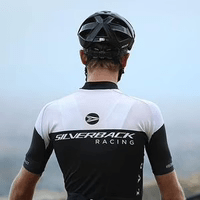
The 2026 Tour saw continued refinement of aerodynamic skinsuits, with teams using computational fluid dynamics (CFD) to optimise fabric texture and seam placement for different riding positions. Aero helmets with integrated visors were near-universal on flat and time trial stages, with lighter, better-ventilated options used on mountain stages where cooling is more critical than aerodynamics.
Shoe Covers and Overshoes
Even shoe covers — aerodynamic shells that fit over cycling shoes — have been shown in wind tunnel testing to save meaningful watts at race speeds. The marginal gains philosophy pioneered by Team Sky (now INEOS Grenadiers) has become universal across the peloton.
Nutrition and Hydration Technology
The 2026 Tour saw continued evolution in race nutrition, with teams using increasingly sophisticated approaches to fuelling. Riders now consume 80–90g of carbohydrate per hour during hard stages — a figure that would have seemed impossible a decade ago, when sports science recommended 60g/hour as the maximum the gut could absorb.
Hydration systems have also evolved, with integrated frame-mounted bottles designed to minimise aerodynamic drag while maximising capacity. Proper hydration is equally critical for bikepacking riders covering long distances in varied conditions.
Data Analytics and Race Strategy
Real-Time Data
Every Tour de France team now operates a sophisticated data operation, with directeurs sportifs in team cars monitoring real-time power, heart rate, and GPS data from every rider simultaneously. This allows teams to make tactical decisions based on actual physiological data rather than intuition alone.
Predictive Modelling
Advanced teams use predictive modelling to simulate race scenarios, calculate optimal pacing strategies for mountain stages, and identify the precise moment when a rival is at their physiological limit. The intersection of cycling and data science has never been more sophisticated.
What Tour de France Technology Means for You
The technologies that debut at the Tour de France don't stay in the pro peloton for long. Electronic shifting, disc brakes, tubeless tyres, and integrated cockpits are all now available on performance bikes at accessible price points. The same is true for e-bike technology — the motor systems, battery management, and drivetrain integration that power Silverback's S-Electro range represent the trickle-down of technology originally developed for the most demanding applications in cycling.
Understanding the technology behind the Tour de France makes you a more informed buyer and a better rider. Whether you're choosing between electric and non-electric bikes, selecting the right components for your riding style, or simply trying to understand what makes a modern performance bike tick, the Tour de France is the best classroom in cycling.
Conclusion
The Tour de France 2026 confirmed that cycling technology is advancing faster than ever. Aerodynamic integration, electronic systems, tyre innovation, and data analytics are all converging to produce bikes and riders that are faster, more reliable, and more data-driven than any previous generation.
Ready to experience performance cycling technology for yourself? Explore the full Silverback bike range or browse our component collection to find the right setup for your riding ambitions. And if you're curious about the e-bike technology that powers our electric range, read our E-Bike Battery Guide for a deep dive into the systems that make modern electric bikes so capable.