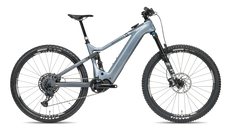
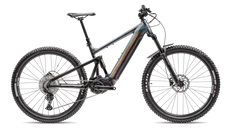
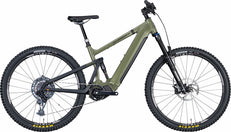
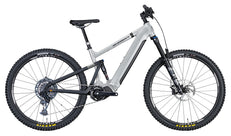
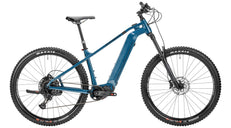
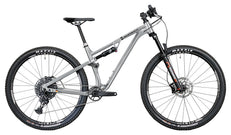
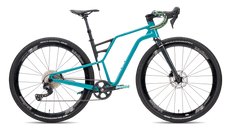
150/145mm Travel
 29" x 2.5" Wheels
 1x12 Speed SRAM AXS
 EP-801 Shimano Motor
 85Nm Torque
 720Wh Battery
 from 20.9kg



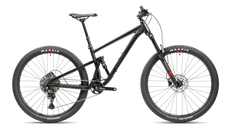
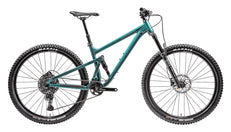
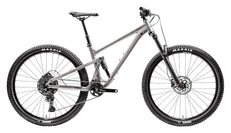
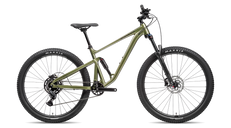
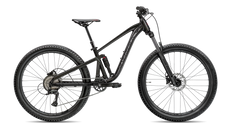
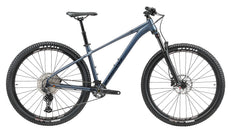
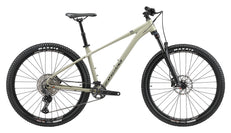
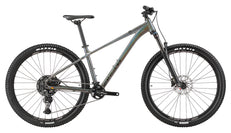
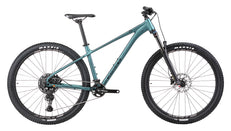
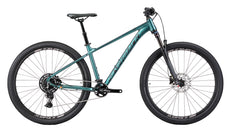
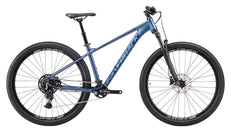
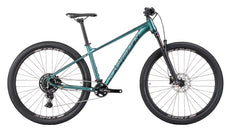


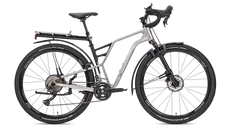
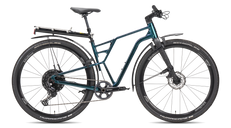
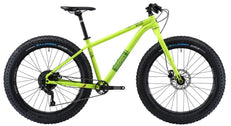
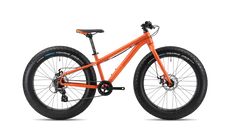
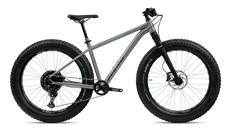
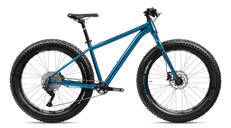





The short answer: choose for the surface and the wheel
A wider fat bike tyre can offer more volume and scope for a larger contact patch on yielding surfaces. That does not make a 4.8-inch tyre automatically better than a 4.0-inch tyre. Tread, casing, rim width, pressure and total load all affect how the tyre behaves.
Before comparing ride feel, establish what your bicycle can safely accommodate. The printed width is not a promise of installed clearance. The actual shape changes with the rim and inflation, and the bike needs appropriate space around the tyre throughout its intended operation. Use the Fat Bikes & E-Fat Bikes collection to identify the exact model before requesting fit guidance.
What changes when width increases?
Volume and soft-surface support
Greater volume can be useful when tuning a setup for soft snow or sand, but only if the tyre remains supported and the surface can carry the load. A wide tyre at an unsuitable pressure may steer poorly or still sink. Width is one tool within a complete setup, not a substitute for testing.
Compare tyres with similar construction if you want to understand width alone. Comparing a light, flexible casing against a heavily reinforced casing can obscure the effect you are trying to measure. A different tread pattern can also change traction and rolling behaviour independently of width. Our Fat Bike Tyre Pressure: Find Grip Without Losing Support guide explains how to test adjustments consistently.
Handling, clearance and practical fit
Wider tyres can change steering feel and need more room in frames, forks, carriers and mudguards. The effect depends on the complete tyre and wheel, so avoid promises that one width always rolls faster or feels more comfortable. Weight also depends on construction, not simply the number on the sidewall.
If you ride mainly firm ground, choose the tyre that gives adequate support and suitable tread for that surface. If you spend much of your time on yielding terrain, consider the potential benefit of more volume alongside the compatibility checks.
Compare the two width categories
| Decision | Around 4.0 inches | Around 4.8 inches |
|---|---|---|
| Soft-surface objective | Assess contact patch and sinking | Assess whether additional volume helps |
| Frame clearance | Must still be measured | Extra clearance can be decisive |
| Rim suitability | Check permitted tyre-rim pairing | Check permitted tyre-rim pairing |
| Handling | Depends on casing and pressure | Depends on casing and pressure |
| Purchase priority | Fit and appropriate tread | Fit and appropriate tread |
Follow a compatibility checklist
Confirm wheel diameter and rim guidance
Start with wheel diameter, then check the tyre manufacturer's permitted or recommended rim dimensions. Follow the rim maker's tyre guidance as well. Matching one measurement is not enough. Verify tube sizing if you use tubes, or every part of the tubeless system if you intend to run tubeless.
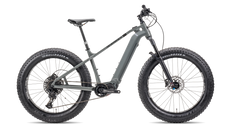
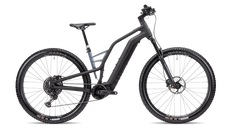
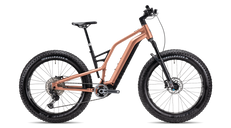
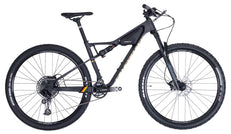
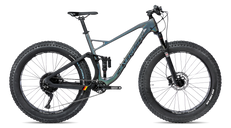
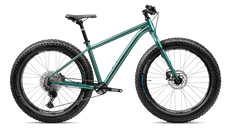
Next, check the bicycle manufacturer's tyre-clearance guidance. Leave the required clearance for the intended conditions; mud and debris can occupy space that looks empty in a clean workshop. Do not make modifications to gain clearance without approved guidance. For full-suspension models such as the pictured Synergy: Carbon Fat Bike, confirm clearance through the relevant suspension movement as well; the hero image does not establish compatibility with either comparison width.
Where 4.7-inch tyres fit into the discussion
The SE:Series Fat Adventure #2 and SE:Series Fat Explorer listings specify 4.7-inch tyres. The store also lists a Vee Tire Bulldozer 26 x 4.7 tyre and tube combo, with a recommended rim width stated as 80–100 mm. That is a product-specific listing detail, not a rule for every fat-bike tyre.
A 4.7-inch marking should not be silently relabelled 4.8 inches. Use exact dimensions when ordering, and confirm the actual fit for your wheel and frame. The closeness of two nominal widths does not establish interchangeability.
Buying advice
Buy a tyre to solve a defined problem: inadequate flotation, unsuitable tread, worn casing or a damaged current tyre. If the present tyre already suits your route, a pressure check and maintenance may be more useful than changing width. Ask for a written compatibility answer when any dimension is unclear.
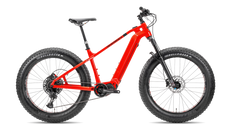
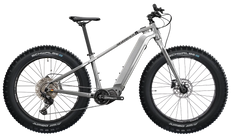
Electric assistance does not remove these checks. Review the exact configuration of SilverRider Fat or S-Electro Diamond Fat Explorer (Red) before replacing tyres. Check guards and repair equipment through Fat Bike Accessories, using the Fat Bike Accessories: What to Buy First guide to avoid ordering an incompatible setup.
FAQ
Can I replace 4.0-inch tyres with 4.8-inch tyres?
Only after checking wheel, rim, frame, fork and accessory compatibility. Do not rely on the width label alone.
Are wider tyres always slower?
No universal answer follows from width alone. Surface, casing, tread, pressure and load all influence rolling behaviour.
Is 4.7 the same as 4.8?
No. Preserve the listed dimension and confirm fit rather than treating the labels as identical.