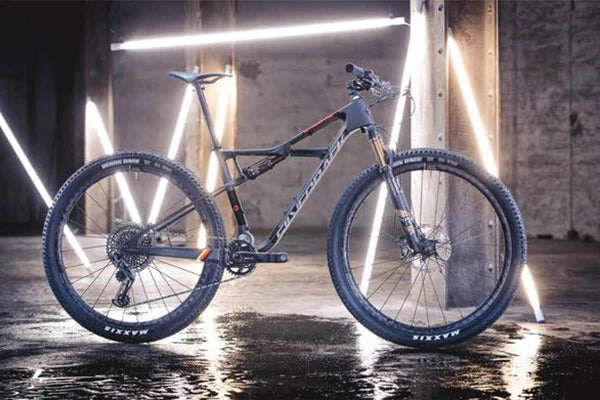
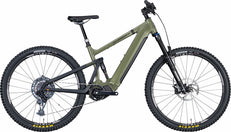
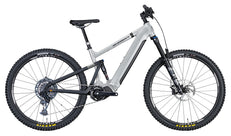
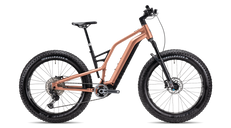
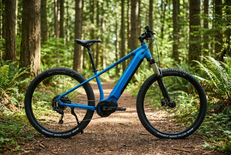
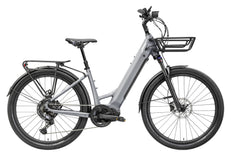
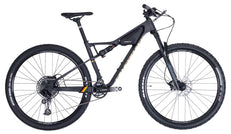
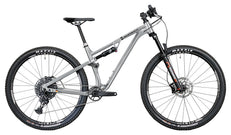
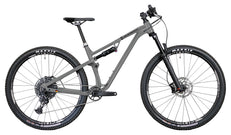
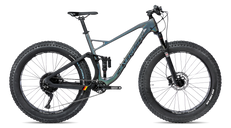
150/145mm Travel
 29" x 2.5" Wheels
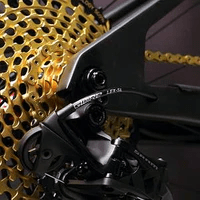
 1x12 Speed SRAM AXS
 EP-801 Shimano Motor
 85Nm Torque
 720Wh Battery
 from 20.9kg
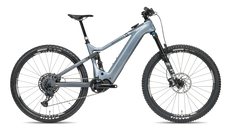
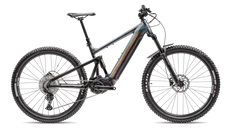
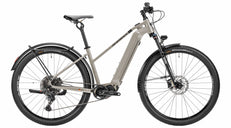
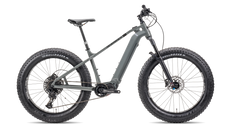

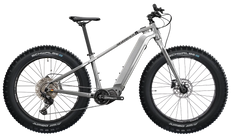







What does an 820 Wh battery tell you?
Watt-hours describe battery energy capacity. They do not describe motor torque, legal classification or the exact distance a rider will travel. The SilverRider Fat product listing specifies a removable 820 Wh battery, giving you a meaningful capacity figure to compare with other listed models.
Range still depends on how the energy is used. A heavily loaded ride through soft sand can demand much more assistance than a sheltered route on firm ground. Treat a battery figure as the start of planning, not as a distance guarantee attached to the bicycle.
Compare 820 Wh with 720 Wh fairly
Capacity is only one variable
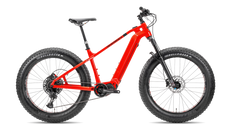
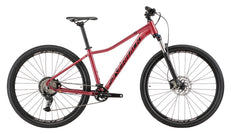
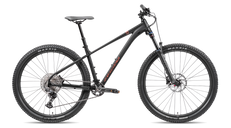
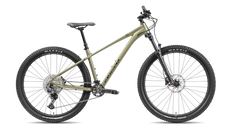
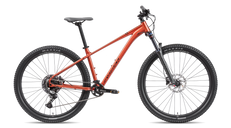
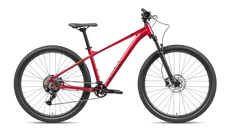
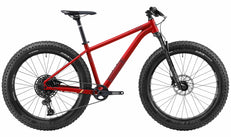
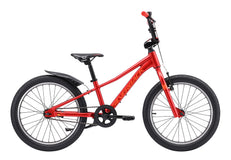
The red S-Electro Diamond Fat Explorer pictured in this article's hero banner is listed with a 720 Wh battery, not an 820 Wh battery. An 820 Wh battery has 100 Wh more nominal energy, approximately 13.9% more than 720 Wh. That calculation compares capacities only; it does not establish a 13.9% real-world range advantage between two complete bicycles.
Different assistance systems, tyres, riding positions, loads and routes can change consumption. A useful buying comparison therefore looks at the whole bike, charging arrangements and fit alongside battery capacity. Bigger is not automatically better if the resulting bike is harder for you to store or handle.
Estimate distance from energy consumption
Use the formula as a planning tool
A basic estimate divides available energy in watt-hours by average consumption in watt-hours per kilometre. If consumption rises, estimated distance falls. For a meaningful estimate, use your own measured consumption on a similar route and hold back a reserve rather than budgeting every nominal watt-hour.
The figures below are arithmetic illustrations, not Silverback test results. They assume a planning allowance of 80% of nominal capacity. That allowance is a chosen example, not a battery-management specification or a manufacturer recommendation.
| Hypothetical consumption | 820 Wh with 656 Wh planning allowance | 720 Wh with 576 Wh planning allowance |
|---|---|---|
| 10 Wh/km | About 66 km | About 58 km |
| 15 Wh/km | About 44 km | About 38 km |
| 20 Wh/km | About 33 km | About 29 km |
Why your route can change the result
Soft surfaces create a different workload from smooth roads. Repeated climbing, headwinds, stops, luggage and stronger assistance can increase energy demand. Temperature and battery condition can also affect what is available. A route estimate from a mild-weather road commute should not be copied into a cold snow ride.
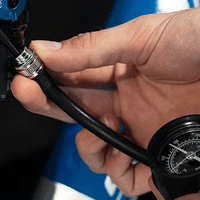
Pressure that is unsuitable for the surface can also make the bike harder to ride. However, increasing pressure blindly to chase range can reduce control on yielding ground. Seek a safe, supported tyre setup first, then compare energy use under similar conditions.
Create your own range record
Measure repeatable rides
Start with a familiar loop and note distance, climbing, weather, luggage and assistance mode. Record battery information consistently before and after the ride. Repeat the route rather than drawing a conclusion from one unusually easy outing. A basic battery-percentage display may be too coarse for precise consumption calculations, so treat rough records as estimates.
For longer journeys, identify a shorter return option before setting off. Carry the repair equipment needed for the route and do not assume a remote charging point is available without confirming it. Charging time also depends on the approved charger and battery system, so request the exact documentation rather than guessing from capacity.
Buying advice
Choose around the longest ride you reasonably expect to repeat, with a margin for difficult conditions. Confirm whether you can remove and carry the battery conveniently, where charging is permitted and how battery support works. If your normal route is short and easy, fit and handling may matter more than maximising watt-hours.
FAQ
Does 820 Wh mean a fixed distance?
No. Capacity needs to be considered alongside consumption and operating conditions.
Can I use any charger with the battery?
Use only equipment approved for the exact battery system. Connector appearance alone does not establish compatibility.
Is the comparison table a range promise?
No. It shows the calculation using hypothetical consumption and a chosen planning allowance, not a tested model claim.
Explore bikes, equipment and related reading
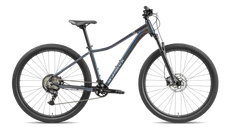
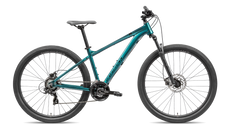
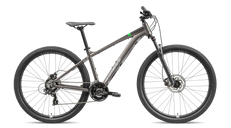
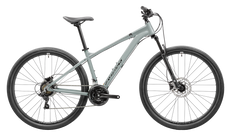
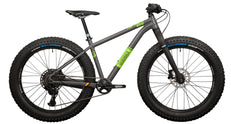
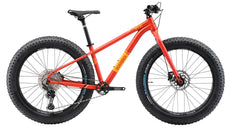
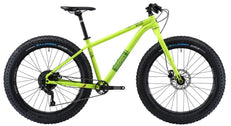
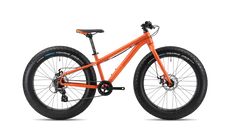
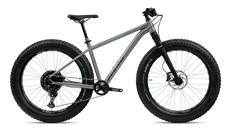
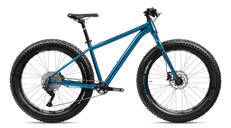
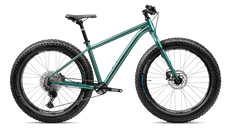
Review SilverRider Fat and S-Electro Diamond Fat Explorer (Red) alongside Fat Bikes & E-Fat Bikes. Compare non-electric alternatives: SE:Series Fat Deluxe #2, SE:Series Fat Adventure #2 and SE:Series Fat Explorer. Plan repair equipment through Fat Bike Accessories and inspect the Vee Tire Bulldozer tyre and tube combo. Continue with Fat Bike Tyre Pressure: Find Grip Without Losing Support and Fat Bike Buying Guide: Choose for Your Actual Riding.